


On the cool afternoon of May 15, 2026, as the bell rang to mark the end of the school day, NIS’s annual Walking Street market kicked off. It was held in the NIS pavilion. About twenty booths—each made of a two-meter-long table—lined the edge of the field in a large rectangle. Parents, students, and members of the NIS community enthusiastically brought all kinds of items to sell: handmade crafts, old items, food, and more. Each booth was creatively arranged with its own style of display. People wandered among them, browsing and haggling, creating a lively buzz. In this warm and pleasant atmosphere, everyone stepped out of their daily roles and became simply sellers and buyers, showing sides of themselves rarely seen in everyday school life.
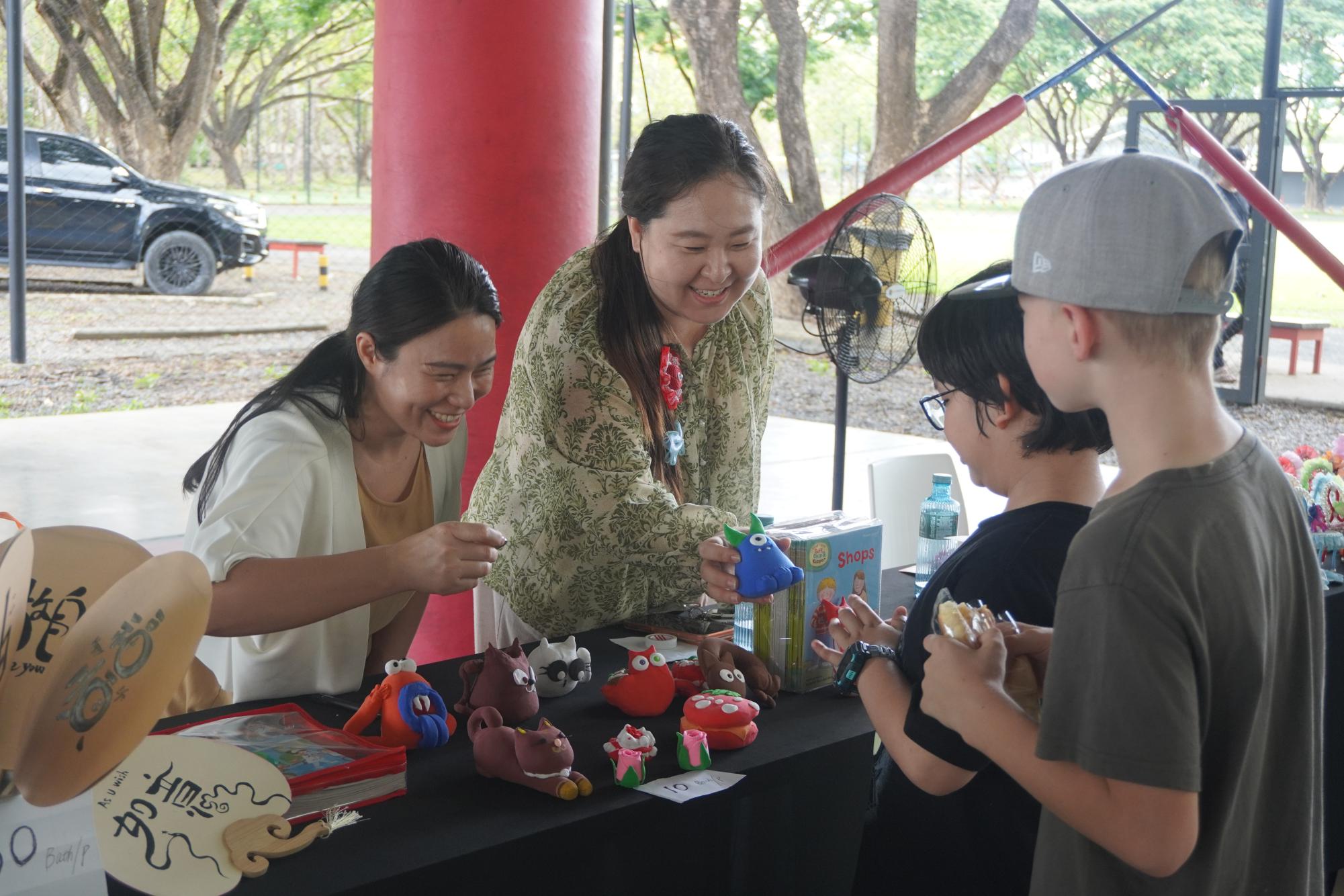
At a booth run by NIS staff members, flowers and small planters made of fuzzy pipe cleaners (chenille stems) caught everyone’s eye. With skillful hands, the staff bent colorful pipe cleaners into different shapes and glued them together, creating these fluffy little masterpieces. Not far away, another booth filled with delicate trinkets drew many students. Beaded chains, lace fabric, and tiny dolls were cleverly constructed into palm-sized doll display stands. According to the vendors, Ms. Chen and Ms. Wei, these were all handmade by them and their family. Further along the table, they also brushed traditional Chinese characters onto fans, artistically distorted based on their special meanings. This unique ink-wash artwork was sold out in no time.
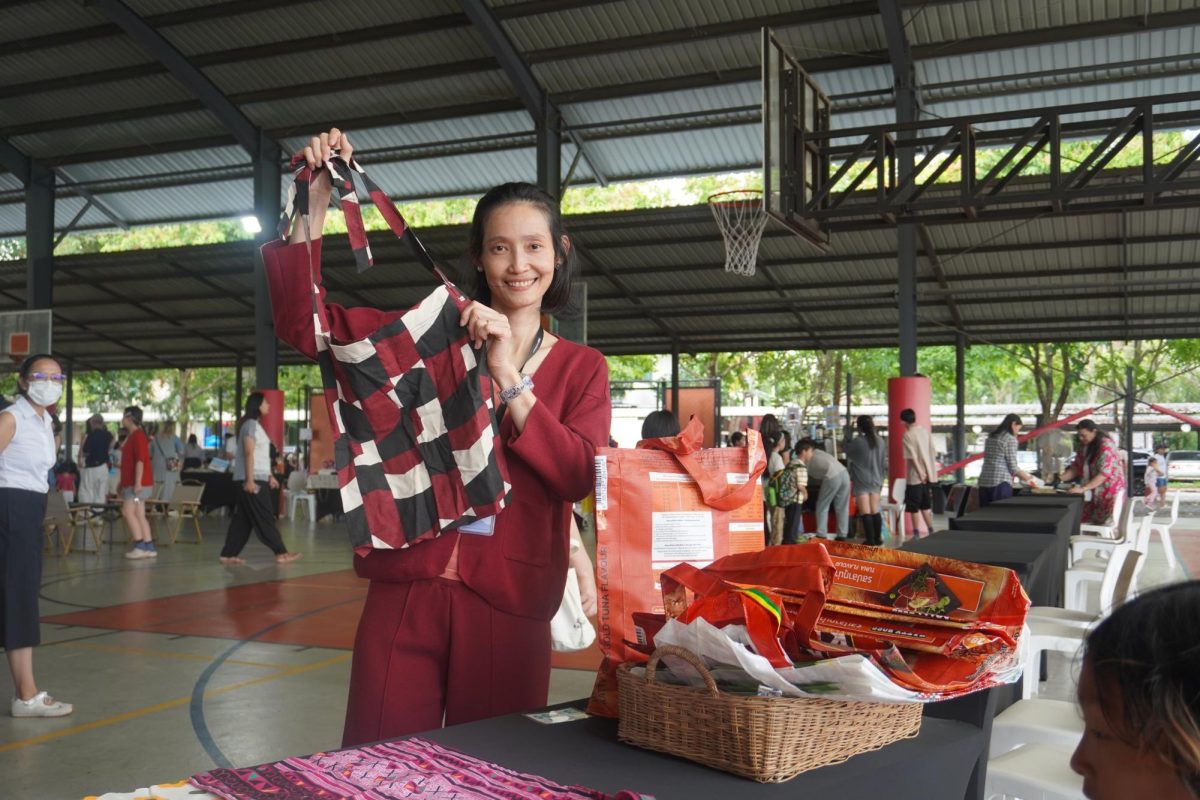
Handmade items weren’t the only draw. At this gathering, all kinds of special pre-owned items not seen in everyday retail were on display. Some booths had piles of old clothes and stuffed toys; others were filled with odds and ends like golf tees and hats. Breaking away from the vintage theme, particularly special were the reusable eco-bags brought by middle school art teacher Ms. Nut. These bags might look ordinary but were cleverly designed: the handles were two separate fabric strips that could be tied to adjust the length, and the material was biodegradable. Ms. Nut demonstrated and said that she had once sold these bags at the Jing Jai Market, but she “didn’t go to sell anymore” ever since she “started working at NIS.” This walking street finally gave her a proper chance to show them off once more.

If the old items caught people’s eye, the smells caught their noses. The food stalls were fragrant, and many students were drawn over by the smells as soon as class ended. One vendor was brewing pour-over coffee, the liquid slowly dripping from the filter into the cup. On the table nearby, lemon-glazed cinnamon rolls, chocolate buns, and milk breads sat neatly in paper trays. At other booths, some people brought milk tea, some brought ice cream—and a pair of Chinese parents also brought a traditional Chinese dessert soup called “qing bu liang.” At the booth of Ms. Mir, a teacher from India, besides shiny accessories, she also offered homemade traditional Indian snacks. The blend of food aromas, laughter, chatter, and footsteps gave the whole market a warm, bustling vibe.
Beyond shopping, this was a great chance for everyone to relax and have fun. Teachers became vendors, promoting goods to students and wrapping up purchases by hand. Such casual interactions are rare in daily school life, making this market feel much more intimate while offering everyone fresh experiences. “The other market events will be double the price…there are a lot of new things that I have never heard of before,” exclaimed Hanna (grade 6), who had already bought quite a few fluffy things. Her friend Mili (grade 7) shared the sentiment, noting, “It feels like this market brings family and people together and gets to know and meet people.” People came to wander around and hunt for treasures. And if they got tired, there were free tables and chairs for anyone to rest on.

conduct trades between teachers. (Herbon Chen)
However, this lively afternoon still left room for improvement. One parent vendor suggested that the school could provide price tags for vendors next time to make the shopping experience more convenient. A teacher also pointed out a significant communication gap, noting that most high schoolers were completely unaware of the event. Indeed, very few high school students were actually present on-site, and almost no booths were run by them. Furthermore, the only ways high schoolers were informed were through morning announcements and an email sent to recruit vendors. Perhaps next time, posting physical flyers or using the social media platforms that students actually check could help make sure no one misses out on such a fun event.