


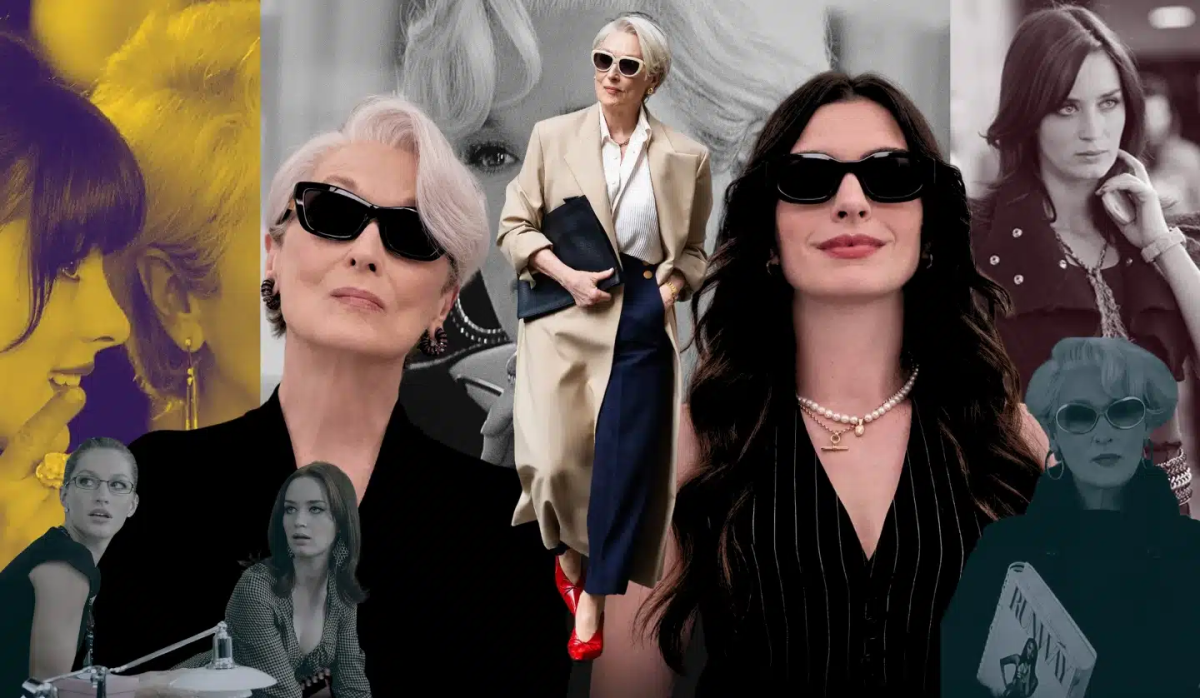
“The world is about change, that’s what human beings don’t understand.”
The Devil Wears Prada was, in my opinion, a classic by itself that doesn’t need further storytelling. So when I first came across the news of The Devil Wears Prada 2, I wanted to know in what way will the original cast and the same group of characters, after 20 years, develop a meaningful, innovative new story.
However, as I was walking out of the movie theatre, my head was filled with confusion.
The “problem” that drove the storyline was the decline of traditional journalism and the reality of inevitable change, full of dramatic contrast. However, I didn’t feel the grand realization or fulfillment that would come to you naturally after being presented with a good story. The pacing was relatively fast (which was observably common in movies of recent years), or at least, not steady enough for any real, convincing character development. In fact, it felt like the characters and events were serving the plot and putting together puzzle pieces to complete a story, instead of the plot and the characters synthesizing with each other, like in the first movie. To put it quite plainly, there were too many elements but too little explanation.
The design of the characters was a major part of that. New characters were stuffed into the plot, which made the story more “inclusive” but less concise. I got confused several times during the movie as new faces kept popping out of nowhere. These figures, after watching the movie, felt like they were only there to make the plot development logical with no further explanation. They skipped all the things that might happen in the middle and came to a happy ending without telling the audience how and why. They were all a part of the film, and because there were too many things needing to be explained, these new characters barely had a complete chance to elaborate themselves. In other words, they didn’t have their own purposes as individuals and the only reason why they existed was to either reflect, foreshadow or be the cause, all serving for the plot. Eventually, they collectively made the story, to an extent, chaotic, giving me the feeling that they only existed as tools to drive the plot forward.

Apart from the new characters, the original main figures had their parts, but in my opinion, they were sometimes out of character and not well-reasoned.
(SPOILER ALERT: The following two paragraphs include commentary on the general roles that the original characters played in the second movie)
Miranda, for example, was established as the unapproachable “devil” in the first movie. But behind her cruel surface she could also be truly impressed or fragile – all her actions and emotions were there for a reason. However, as I was watching the second movie, I kept thinking ‘Miranda wouldn’t talk nor behave like that’. It seemed like her character disappeared when she suddenly became willing to change the way she acts because of the problem she’s facing. But when dealing with similar situations in the first movie, while she well acknowledges how people comment on her, she couldn’t let herself be affected because that’s what it takes to be in her position. She had a solid high self-esteem, and that was why the shift in behavior became so outstandingly odd in the second movie. For a second, I even thought that maybe they intentionally created this “downfall” for her to serve hilarity purposes through strong contrast and forgot about her solid character.
Another thing I questioned was how Emily was depicted as the stereotypical villain. She had her character development and motive well-explained in the first movie – she grew sharp edges because that’s what she needed to keep this job and life that “a million girls would kill for”, but she was never actually evil as a person. In the second film, however, it felt like she only behaved in certain ways because the plot needed someone to be the devil’s advocate to create contrast. In other words, it felt, again, out of character.
(You’re good, no more spoilers in the rest of the review)
Therefore, with all the new characters, storylines and conflicts packed together, the movie became, in my opinion, slightly unconcise.
One sub-plot that I was glad to see in the second film though, was Nigel. For context, in the first movie, he worked for Runway for 18 years while waiting for a new work opportunity, which eventually came but got replaced with someone else by Miranda without notifying. Throughout the whole storyline, he played multiple roles such as Miranda’s loyal employee who understands the meaning behind the industry, and Andy’s wise “mentor” who guided her when she was lost. By himself, he’s very familiar with the nature of working under companies like Runway; at the same time, he had his own ambitions and was not afraid to pursue what he values. All these different layers were evident throughout both films and provided sufficient reasoning for the audience to understand the significance of what would happen to him in the second one. I personally think the story would be much more comprehensive if other main characters showcased the similar level of character complexity in the continuation of the story.

Now, shifting the focus away from the characters, let me explain how the message did serve a purpose that suits the time period we live in today.
A message that aims to reflect how the rapid technological and societal change influenced traditional journalism was highly relatable, especially as a journalism student. In fact, the whole movie was based on change and all the drama that could occur under rapid, unexpected changes. Although I spent paragraphs earlier commenting on character development, the message was indeed thought-provoking. People don’t spend time sitting down flipping through pages of a physical magazine or newspaper anymore. They don’t need to receive information from paper, social media and the internet could do all that. A fashion magazine might not even need models in the future. Everything could be digital. And that became the problem for people like Miranda, Andy and Nigel, who still value the importance of traditional media, to find a way to pave through and adapt this change. Quoting someone from the second film, “The world is about change, that’s what human beings don’t understand”. I think the film successfully put the audience into thinking. How is our world different from 20 years ago? Is it still worth it to preserve traditions, whether it’s journalism, fashion industry, or anything else? Why does any of these preservations even matter? Will it still matter after another 20 years of time? While the characters in the film needed to eventually find a solution, it is equally important for us audiences to consider the situation we’re currently facing.
I hope you will have something to say about these questions, or perhaps even a deeper understanding of our world and society, if you decide to watch The Devil Wears Prada 2. I could argue further about the flaws of this film as a piece of artwork, but at the same time, I would definitely say that the purpose behind this film was made more meaningful by the story.