


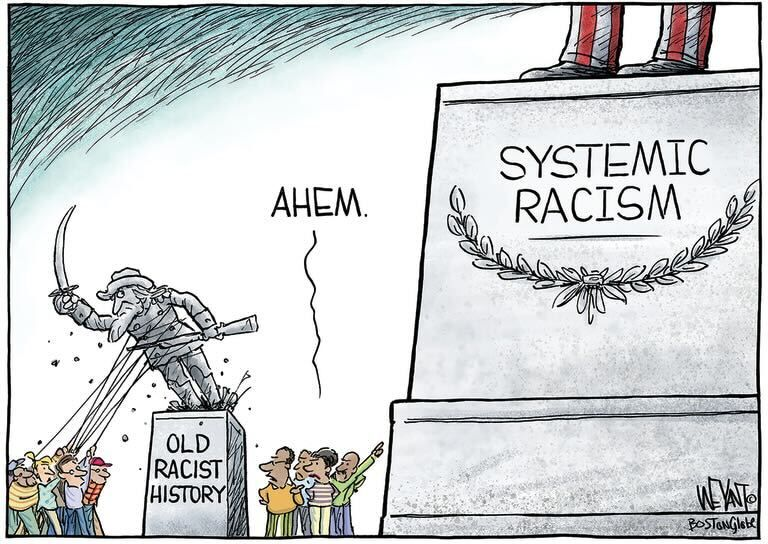
Throughout the decades of human existence, we have gradually moved toward a future of equality and unity. However, the passing of every progressive act through Congress has always faced immense backlash, and it has certainly not gotten better with the passage of time. In addition to this, recent political acts made by U.S. President Donald Trump and the MAGA corporation have shown us just how fragile progress really is.
Within months, hundreds of research labs, medical institutions, and education development industries were destroyed in order to support an ever-looming threat of WWIII. Disabled people no longer could afford the necessary medication to survive, children were ripped from their homes, and MAGA supporters spewed their hateful beliefs towards oblivious and developing teens with no repercussions.
It is now clear as day: the very foundation that our society stands on is rotten, and we can not continue to build on a wobbly base.
And so, this article examines multiple ways in which White Supremacy leaks into everyday interactions, focusing on the internalization of Western superiority, how such a mindset was constructed, institutionalized, and remains influential today, with a variety of examples.

If you crumble a piece of paper and then proceed to uncrumble it. No matter how many times you smooth it out, it will never regain the same pristine appearance it had before. The same can be said for historical tragedies; no matter how much time has passed, some catastrophes will continue to haunt hundreds of families for years to come.
Today, it seems that there is no imaginable crime that humanity hasn’t committed.
Throughout history, acts ranging from minor crimes like shoplifting to atrocities as severe as mass genocide have been on the table, yet history has often been written in favor of the victors, who are frequently the oppressors. The problem with favoring one perspective in war or genocide is that it results in many historical tragedies being minimized or erased in order to portray those in power as the “good guys.” This pattern is especially evident in narratives shaped by the Western world, whose people have once conquered vast regions and inflicted harm on nations worldwide. Many of the societies affected by this domination continue to suffer in the long-lasting aftermath of their tyranny today.
Colonial expansion by Western nations between the 15th and 20th centuries was not only a political and economic act, but also a cultural and psychological one. While the physical consequences of colonialism, such as economic underdevelopment and political instability, are widely acknowledged, lingering psychological consequences have started to gain attention among historical scholars.
Firstly, I think one aspect of human civilization that most people don’t realize was built entirely by Western standards is the beauty industry.
One prevalent example I’ve personally witnessed many times throughout my life is the popularization of the double eyelids. For some reason, there has apparently been a unanimous agreement in favor of double eyelids being the epitome of beauty in many parts of Asia. In fact, this beauty standard is so valued that it is usually the first thing elders offer as an explanation when they compliment your physical features. Even today, many Asian societies equate double eyelids with attractiveness and confidence, while monolids are associated with sleepiness and apathy. Personally, I’ve always found it interesting that monolids are often a stereotypical trait for Asian people, coupled with the fact that it is generally accepted as an undesirable facial feature both in Western and non-Western civilizations.
And so, through extensive research, I’ve found that the popularity of double-eyelid surgeries and the beauty ideal associated with it can be connected to the long-term impact of Western colonialism and internalized oppression.
During the 19th-20th centuries, Western powers, predominantly Britain, France, and the U.S., aggressively emphasized the idea that white bodies are the standard of beauty, intelligence, and modernity through missionary education, Hollywood films, and later, globalized beauty industries.
This produced the psychological effect psychologist Frantz Fanon calls “epidermalization,” where colonized people begin to see their bodies as “lesser” compared to white bodies.
Double eyelid surgery first appeared in Japan in the late 1800s and became widespread in Asia after World War II. This innovation happened during the Meiji Restoration, which is a period of time where Japan actively imported Western technology, culture, and scientific knowledge, partially medicine. Dr. Kotaro Mikamo, a Japanese surgeon recognized for performing the first recorded double eyelid surgery, studied Western medicine and developed his technique in response to Japanese fascination with Western aesthetics during that time. Surgery became popular partly because of Western beauty norms glamorizing large, deep-set eyes. This is a classic case of internalized colonialism/internalized racism, where one subconsciously absorbs the belief that features associated with whiteness are superior.
After WWII and the Korean War, U.S. plastic surgeons, most notably Dr. David Ralph Millard, performed double eyelid surgery on Korean women as a way to “help them look more Western.” This process is documented in several medical journals from the 1950s, with entries laced with racist undertones. The procedure became mainstream as a way to help Korean citizens “increase their job prospects” and “make them appear friendlier.”


The thing is, beauty is entirely subjective. There will never be a universal, fixed definition of beauty.
Ideals change over time, and usually, what “high-status” groups look like becomes the ideal. For example, in Victorian Europe, pale skin was ideal because it signified wealth (tan skin meant working outside in the fields). However, in modern Western societies, tan skin became ideal once tanning was associated with vacations and leisure.
If monolids had been associated with elite Western classes, they would most certainly have been glamorized globally by now.
Non-Western children who grow up in societies where beauty standards are overwhelmingly Western are more likely to internalize feelings of inadequacy because the traits that are most consistently praised and fought over (light skin, narrow and pointy noses, large eyes) often do not resemble their own natural features. From a young age, children absorb media from mall advertisements, television shows, toys, to social platforms that center on and glamorize Eurocentric appearances. Over time, this can lead to body dissatisfaction and the belief that societal acceptance requires modification: through makeup, skin-lightening, or other cosmetic procedures.
In fact, the practice of skin lightening is a prevalent public health issue in West Africa, South Asia, and Southeast Asia, as many products sold in these regions contain mercury and/or hydroquinone. The use of these products can lead to severe toxic mercury and hydroquinone poisoning that contributes to kidney damage, skin damage, muscle weakness, memory loss, and bladder cancer, as reported by the WHO. Unfortunately, studies continue to show high practice of skin lightening among students in ASEAN countries, with prevalence up to 69% in Thailand, despite around 79% of students being aware of the harmful side effects.
Going back to South Korea’s beauty industry, where the culture places significant pressure on individuals, especially women, to abide by strict beauty standards. South Korea has the highest rate of facial plastic surgery per capita, often referred to as the “cosmetic surgery capital.” Korea’s beauty industry developed heavily under Japanese colonial rule and heavy U.S. military and cultural influences following the Korean War, linking Western appearances with modernity, power, and superiority. Early cosmetic surgery techniques introduced by American military doctors later embedded the association of Western features with the idea of professionalism and success. As South Korea rapidly industrializes, beauty is held to the utmost importance, and it can dictate a person’s employment, social status, and even their right to basic respect. This historical background explains why Korean beauty standards are often described as unforgiving. The societal pressure placed on individuals, especially on young people, pushes them to modify their bodies in order to be seen as “worthy.”Accordingly, research shows that body image dissatisfaction rates are as high as 50-60% in Korean adolescent girls, with body dissatisfaction linked to low self-esteem, depression, and eating disorders.
Of course, this internalized Western superiority complex doesn’t just affect bodily imagery. Many aspects of U.S. education historically (and in many places currently) have been created to minimize or erase the suffering of colonized people, which leads to a multitude of mental disadvantages that are more prevalent amongst non-white races.
Education systems were one of the primary tools utilized by 17th-19th-century colonizers to enforce and normalize Western superiority. Colonial curricula centered on European history, literature, and philosophy. From a young age, children were taught about the apparent superiority of Western cultures and perceived their own cultures as inadequate.
Even today, immigrant children still experience significant disadvantages and harms in many Western school systems, even if those harms are more subtle or less openly acknowledged. To give an example, Western school curricula focus on Europe and U.S. histories, downplay colonial violence, and ignore contributions from Africa, Asia, the Middle East, and Latin America. Immigrant children rarely see themselves represented in a positive manner, which sends the message that their cultures and people have less value or are the inherent “bad guys.”
Research shows that immigrant kids face numerous “microaggressions” from both teachers and students that make them feel out of place. Even something as simple as mispronouncing their names, teasing for accents, and mocking cultural clothing can make these children feel like the odd ones out, like they will always be the outsiders because of something they can not change. At the same time, Western children within these education systems are taught to have a one-dimensional view of non-Western people. Being raised in an environment where they are actively told that Western civilizations are advanced in every single aspect may lead them to unknowingly diminish other cultures.
For decades, history textbooks from the U.S. still described genocidal events as “conflicts” or “settler-Native tension.” Massacres and forced displacement policies enforced upon Indigenous communities during the Colombian era were worded vaguely to present colonization as an inevitable, progressive act.
Outside of Western countries, analyses of children’s books in China found that White or Eurocentric features are frequently presented in illustrations, potentially shaping children’s early ideas about beauty and heroism.
Internalized racism is especially dangerous to developing children. The Clark Doll Experiment, for instance, is a popular documented example of this. In this experiment, African-American children chose to give different characteristics to two identical dolls in every way but color. Disturbingly, the majority of these children associated positive traits with the white doll. When asked to point out “the doll that’s most like you,” it was reported that many children were upset or ashamed in identifying with the black doll. This internalized inferiority was so severe that it was used as evidence in Brown v. Board of Education, where segregation was deemed a violation of the Constitution. It was there that Chief Earl Warren stated that this racial separation would likely generate “a feeling of inferiority as to their status in the community that may affect their hearts and minds in a way unlikely ever to be undone…”

Psychologically, children with an inferiority complex often experience low self-esteem, anxiety, academic struggles, overcompensation, depression, etc. In some cases, these children can even develop a superiority complex as a way to escape the feeling of being inadequate.
As adults, internalized self-hatred often leads to severe mental health issues, substance abuse, or suicide. In fact, suicide rates among Indigenous communities in Canada are at least twice as high as those in non-Indigenous communities; suicide rates among adolescent Indigenous individuals are found to be around five to six times higher.
In many ways, Chief Earl Warren was correct. With no extensive research on the importance of mental health, trauma and harmful beliefs passed down from generation to generation, therefore giving non-white children a higher risk of mental obstacles that can lower their job prospects, physical health, and family relationships.
Western superiority is not confined to policies and institutions; it is normalized through cultural traditions that are rarely questioned. These beliefs are reinforced through stories taught from childhood. One of the most revealing examples of this normalization is the commonly taught origin story of Thanksgiving.
Most Americans grew up with a simple, wholesome story that prescribed the arrival of the Pilgrims at Plymouth in 1620, where they struggled to survive. Indigenous Wampanoag people helped them, and it was then that they all shared a peaceful “first Thanksgiving feast.”
Early settlers did not, in fact, embrace the existing Indigenous community with open arms and share a warm, hearty feast. Later, Thanksgiving became a celebration of colonial victory over Indigenous people. In 1637, Governor John Winthrop declared an official Thanksgiving day after colonists massacred about 700 Pequot men, women, and children at Mystic. This trend continued throughout the 1600s as Thanksgiving feasts often followed colonial military victories against Native nations. So, although modern Americans associate Thanksgiving with unity and gratitude, the holiday was actually a celebration of violence, dispossession, and conquest.
In 1970, the 350th anniversary of the Pilgrims’ landing, the Commonwealth of Massachusetts invited Wampanoag activist Wasmsutta Frank James to speak at a celebration. But when the organizers saw his speech, which bluntly described the genocide and ongoing injustice, they refused to let him deliver it.
Rejected from the event, he instead gave the speech on Cole’s Hill in Plymouth, marking the first National Day of Mourning. Each year since 1970, Indigenous groups and allies gather in Plymouth to mourn ancestors, protest historical re-analysis, and raise awareness.

Indigenous leader Mohtowin Monro, who continues to carry on the tradition of the National Day of Mourning, stated during an interview: “The celebration of [European explorer Christopher] Columbus is really harmful. It gives us the idea that Native people were these passive people, just waiting for Columbus to arrive — just waiting to be discovered — when, in fact, they had many, many different cultures and were perfectly successful on their own… But it continues to be presented that Columbus and all the Europeans who came somehow brought civilization to us…. It is damaging if you’re a kid and you’re Native. You know, Columbus was a genocidal maniac… It erases us and presents their version of history as the only true history.”

European imperial powers justified colonial domination through ideologies that framed Western civilizations as more advanced, rational, and moral. Colonization is introduced as “civilizing missions” and promoted as “the White Man’s Burden.”
Notably, a 2024 YouGov poll discovered that a large percentage of Americans still look upon Columbus favorably (52% of U.S. adult citizens), indicating unfamiliarity with the actual stories behind his conquest.

The widespread globalization of Western holidays can have subtle but deeply harmful effects on non-Western children, particularly when these celebrations dominate schools, media, and public spaces. When Western holidays are treated as universal or “normal,” non-Western children may internalize the idea that their own culture is less important or less worthy, leading to feelings of cultural inferiority. As a result, children, particularly those in Western communities, may feel the pressure to suppress their own cultural identities to avoid exclusion or ridicule.
Over time, this cultural dominance can contribute to identity conflict, lowered self-esteem, and intergenerational cultural loss. While not directly, it persistently teaches non-Western children that adhering to Western norms is the condition for true acceptance and belonging.

During the COVID-19 pandemic of 2020, widespread xenophobic language and discrimination against people of Chinese and broader Asian descent emerged in many Western-dominated countries. In the United States, federally recorded hate crime incidents targeting Asian Americans nearly doubled from 158 in 2019 to 279 in 2020 and climbed even higher in 2021, while organizations like Stop AAPI Hate documented over 11,000 reported incidents of harassment, bullying, and discrimination between 2020 and 2023.
The use of racialized slurs and continued accusations voiced on online platforms by highly influential figures, such as the current U.S. President Donald Trump, resulted in extreme animosity towards individuals of Asian descent and the World Health Organization. During 2021, one-third of English-speaking Asian adults feared someone might threaten or physically attack them.
In Midland, Texas, a man stabbed a father and his two young children because he believed they were Chinese. In Scotland, a mother walking with her son was physically assaulted by a group of teenagers.
In these cases, these events function less as origins of racist beliefs, but rather as an excuse that allowed individuals with pre-existing biases to feel validated and emboldened in expressing them in public spaces.
People’s one-dimensional view of Chinese people during COVID-19, seeing them almost as an extension of the virus itself, can be explained by the long-standing racial stereotypes, political scapegoating, and colonial ways of thinking.
Chinese people were not seen as individuals during the pandemic because of dehumanization and simplification caused by fear. In moments of crisis, humans instinctively seek clear causes and visible targets. A virus, an abstract pathogen, is not a tangible being; therefore, Chinese bodies became a symbolic replacement for the disease. This reaction draws heavily from pre-existing stereotypes that have been institutionalized for centuries.

Western societies portrayed East Asian people as unhygienic and indistinguishable, and these tropes made it easier for the public to flatten Chinese individuals into a single, negative narrative. When someone is already viewed as foreign and one-dimensional, it becomes disturbingly easy to associate them with contamination.
In a way, the COVID pandemic became a reflection of the colonial mindset, in which non-Western populations are reduced to a function (such as laborers, threats, burdens, or, in this case, carriers of diseases) rather than a living, breathing human being.

While I do not wish to diminish the significance of the horrific event of 9/11, I’ve always found it interesting that its famous slogan was “Never Forget,” while the attitude towards honoring the thousands of non-white populations that were brutally murdered, colonized, and enslaved was always “well, we can never move on from it if we keep bringing it up.” In fact, this was almost said word-for-word by the world’s richest man, Elon Musk, during an interview.
The truth is, this is not an issue we can simply “get over.” These harmful institutional frameworks built the very foundations of the belief systems of multiple generations. For instance, the political slogan “Make America Great Again” (MAGA) was noted to have nostalgic appeal to those who interpret “great again” as a return to a social hierarchy privileging whiteness.
Western institutions were built on foundations shaped by white supremacy. The systems themselves were created during eras where white dominance was absolute. Government frameworks originally protected slavery; educational systems were designed to exclude non-white children; economic structures produced generational wealth gaps; and medical, legal, and media institutions alike routinely privileged white viewpoints while devaluing others.
Even after explicit racism became illegal, these systems continued to produce unequal outcomes due to the normalization of such behaviors and internal inferiority complexes that have developed and been passed down over numerous generations. Today, these discriminatory legacies tend to appear less as open hatred and more as unequal access to opportunities and success.
For instance, multiple studies published by Harvard, MIT, etc show that submitting the same resume gets significantly more “callbacks” if the name sounds white, while getting fewer callbacks if the name sounds Black, Middle Eastern, or South Asian.
Modern medical studies show that women of color have higher rates of childbirth complications because doctors ignore their symptoms, with some medical students still believing the false idea of black skin being thicker or more pain-tolerant than white skin.

While the current political climate creates the sense that racial inequality is impossible to eradicate, history shows that systems can be transformed through constant, sustained pressure, as seen in abortion, civil rights, and Indigenous sovereignty rights movements. The system is not unchangeable, but its original architecture will continue to shape the same outcomes unless intentionally rebuilt to produce the opposite. Again, like a house built with crooked foundations, you can continue to renovate it, reinforce it, or rebuild parts of it, but it will only be truly fixed once we stop denying its core flaws.
The cost of ignoring these foundations is not theoretical; the consequences have already been carried by numerous generations. It is the children who will inherit the consequences of society’s refusal to change.
And I wish for the day when children from all over the world can look in the mirror without being reminded of what they are not. I wish for the day when classrooms do not quietly teach children who belongs and who must adapt. I wish for the day when children see themselves reflected with dignity, not distortion. I wish for the day when children grow into adults who were never taught to hate who they are.
Until then, it is our responsibility to question the system, the stories, and the standards. Because no child is born hating their reflection, it is something the world teaches them. And if these beliefs can be taught, then they can also be undone, which is a journey that requires honesty, accountability, and the courage to unlearn what we have long accepted as normal.